Generate Solutions with Artificial Intelligence

The main purpose of this article is to provide information about AI (Artificial Intelligence) from the scratch. It consists of a brief description about AI. At the end of this article you’ll get an idea of how AI works, different ways to learn AI and how it is important in today’s world.

What is Artificial Intelligence?
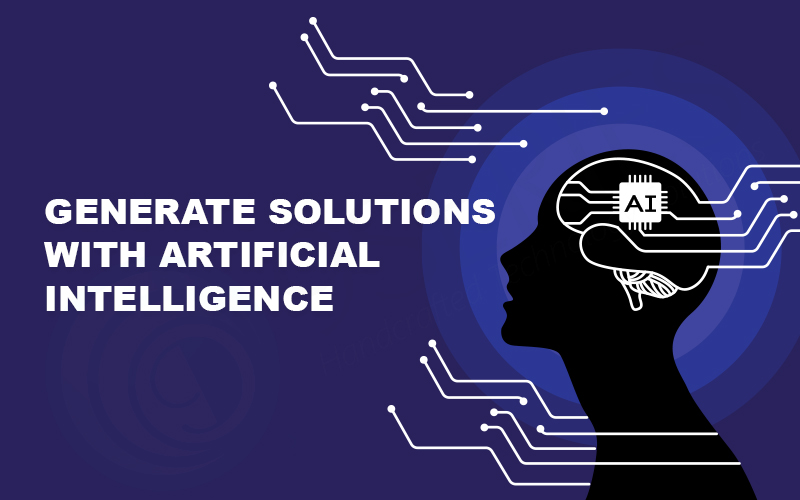
AI is developed to make machines do things which humans do better. AI is making machines intelligent and has become a vital part of technology. It is an area of computer science that focuses on creating intelligent machines that work like human beings.

In a few years computer system will be able to completely simulate the human mind. Stephen Hawking once said “The development of full artificial intelligence could spell the end of the human race. Humans, who are limited by slow biological evolution, couldn’t compete, and would be superseded.”

The main highlight of AI is logical deduction, Speech Recognition, Natural Language Processing (NLP), Logical Reasoning. NLP simply means a process that produces text from computer data. It acts as a translator and converts the computerized data into natural language representation.

AI is a general category common to all Three which are categorized as below :

~ Machine learning
Machine learning is a important part of Artificial Intelligence that has the ability to learn without being explicitly programmed. It uses statistical analytics and it’s main work is to recognize patterns and predict the result data set with the help of algorithms.

~ Deep learning
Deep learning idea comes from working on the brain neurons. Basically it depends on Artificial Neural Network (ANN). ANN is an information processing algorithm that works as a biological nervous system. A neural network is kind of an addressable memory content that has the capacity to store experiential knowledge and making it available for future use.

Most Used Programming Languages for Developing AI

~ Python
Python is the most popular in the list of AI development languages because of its simple structure. Popular TensorFlow open source library uses Python programming. The Rich text file processing tool makes it the best solution for NLP Problems.

~ C++
The main benefit of using C++ for AI is its speed. C++ is counted as the fastest programming language for AI. AI requires mathematical calculation and complex logical deduction so it consumes more time span. C++ is the most recommended language after python for machine learning and neural networks.

~ LISP
Lisp, is stated as ‘List Processing’ the second oldest programming language in the world, Lisp has some special features because of that it is flexible to use it for development of AI.

~ Prolog
A Prolog is a logical programming language in which logical reasoning is shown as programs. A Prolog program consists of declaration of the facts, several logical assertions, formulation of questions to be answered. It is declarative i.e. the logic of any program will be viewed by rules and facts.

~ Java
Java is an object-oriented programming language. It runs on all platforms due to Virtual Machine known as Java Virtual Machine (JVM),which makes it platform independent. Java is easy to use and easy to debug. Java AI programming is good for search and sorting algorithms, neural networks.

There are some frameworks available to get started with the basics of building your own artificial intelligence. These frameworks allow developers to connect their own device or apps to voice recognition system, Chatbot and Artificial Intelligence. Some of the best frameworks are as follow:

1. Wit.ai
Wit.ai is a service that provides a unique amalgamation of both a voice recognition and machine learning for the developers. It caters to the services that convert verbal commands into text and can also be trained to understand those commands.

2. Api.ai
Api.ai is a framework that helps to develop AI bots. It allows users new ways to use your product by building engaging voice and text-based interfaces, such as voice apps and Chatbot. Api.ai has changed its name to ‘DialogFlow’ but the workflow is still the same. It is versatile that means bots can be deployed to various platforms which supports AI such as FB messenger, Google Assistant, etc.

3. Melissa-AI/Melissa-Core
Melissa is a virtual assistance for OS X. It currently uses either Google’s speech-to-text engine or CMU’s Sphinx assistance. If you are more on the programming side of the AI and Raspberry Pi, you could use Melissa. Being an open source personal assistant Melissa has been written in Python that runs on Raspberry Pi, Windows, OS X and Linux. It has been updated quite often.

4. Clarifi
Clarifi is completely different from other services, this service can recognize both image and video content. It has its own deep learning engine that continuously improves with every use and has the ability to see and recognize objects. It can do all sorts of things from tagging images, to searching for other images that are visually similar. You can even teach the platform entirely new concepts by training it with your own examples.

5.TensorFlow
It is developed by Google. It is an open source library for numerical computation. If you want to develop AI systems from the scratch this is the best option. You will learn more about deep learning and artificial intelligence. TensorFlow is best for image processing.

Conclusion:
Problem solving is a major area of concern of AI. It is the process of generating solutions from a given data. To solve a particular problem we need to build a system or a method which can generate required solution. AI is a very vast field that holds the capacity to generate these solutions. It includes many areas like Computer, Maths, Biology, Psychology etc.


How to Become a Successful Travel Agent in New York

Do you spend your days scouring the internet for flights, collecting hotel loyalty points, and travel frequently? Have you wondered how to become a travel agent? This blog highlights the essential traits and tips to become a travel agent.

To become a travel agent and start your own company necessitates a minimal amount of overhead. For instance, to establish your company, you will need to rent a facility, deal with licenses, buy materials, build an app, and hire employees to run the front desk.

Statistics show the cost of travel agency business with wages costing (32.5%), other purchases (53.3%), and Rent & Utilities (1.5%).

1. Get trained
2. Create a website or an app
3. Learn the fundamentals
4. Expanding your customer base
5. Incorporate cutting-edge technology
6. Create a market niche
7. Become a professional
8. Customer service is important
9. Conclusion

Once you have secured a career as a travel agent, consider how you may make more money and set yourself apart from the competition. As you begin your profession, there are several things to keep in mind.

1. Get trained

Early in your career, invest in training and coaching. Participate in programs offered by the renowned Travel Institute or Academy. It’s a great way to get started, learn about services and marketing tactics, and create a professional network. To work independently as a travel agent in several states, it is suggested that mobile travel agents must take accredited training.

2. Create a website or an app

The development and use of mobile apps can considerably boost the number of consumers for travel firms. Today’s passengers like being cared for, receiving real-time assistance when needed, and taking advantage of online services.

All of these problems can be readily overcome with the help of customised mobile apps. Learn how to make contact with a reputed iPhone app developer NYC.

3. Learn the fundamentals

Communication is the most fundamental ability. Generally, the person who calls a client back promptly or responds to a message/ email with precise information wins. Get straight to the point, be concise, be professional, keep it personal, and under-promise and over-deliver.

4. Expanding your customer base

As a travel agent, how can you generate more money? Through clients! A report states leisure traveller’s account 79% of the overall visitors and business travellers account 20% of the city visitors. Any firm can benefit from networking abilities. Make yourself approachable.

To expand your database, get your identity highlighted and network as many customers as possible. Participate in Chamber of Commerce programmes in your area, and interact at the local country club. Establish a network while being service-oriented and sales-focused.

You wish to receive satisfied customers who will return to you whenever they need to book a vacation. You will want to keep your customers pleased by finding amazing offers and providing them with unforgettable experiences.

5. Incorporate cutting-edge technology

One of the most crucial abilities a successful travel agent should possess is adapting to new technologies creatively while maintaining a personal touch. There are innovative methods to employ technology while maintaining a high level of personalisation for your clientele.

Finding the proper iPhone app developer NYC that can provide exceptional guidance and the right tools to help you establish a successful career in the travel industry is your best bet for a fantastic start in the field.

6. Create a market niche

Specialisation is not an essential trait, but as your career progresses, you may want to specialise in a certain area. Your niche can assist you in attracting consumers, and it can be anything related to travel as long as there is a demand for it.

Today’s people are searching for personalised customer attention, and they frequently pick specialty vacations that aren’t the typical tourist sites. Snorkeling, golf holidays, all-inclusive Caribbean resorts, and various other specialty activity trips are examples of niche markets.

7. Become a professional

You must not only establish a specialty travel business, but you must also become an expert in the locations to which they send clients. The agency should be aware of the location to which their clients are travelling and the culture, events taking place during their trip, and odd activities available to make the holiday more memorable.

An independent agency will frequently offer to schedule tours and excursions for clients before their arrival, ensuring that their vacation is worry-free and relaxing, with no worries other than being on time for the activity.

8. Customer service is important

A professional travel agent is expected to provide exceptional client service to build your business faster than anything else. It’s critical to be available to your clients and to stay on top of your competitors.

Knowing your consumers and the kinds of travel that they are most interested in will enable you to match them with travel bargains as they become available. This is a win-win situation for both the travel agent and the traveller.

In a nutshell!

Create your organisational system to keep track of client projects. You will earn efficiency improvements as your business grows if you implement this early on. Never forget about your customer’s requirements, and follow up on all of the specifications.

Article source: https://www.9series.com/blog/become-successful-travel-agent-new-york/

AI Competitive Edge for Business Solutions and Applications

The growth of Artificial Intelligence in recent years brought forth a major challenge for brands in deploying such AI solutions. Many brands lack the clarity regarding where to start the AI integration process and profitably deploy these solutions in the most effective manner.

A PwC report estimates that AI is capable of contributing almost $15.7 trillion to the world economy by 2030. Today, every business is aware of the AI’s operational benefits in the modern technological territory ruled by data mining. However, such a position also poses a major challenge in front of human operators: which tasks are to be assigned to software and which are to be kept under their watch.

Implementing AI Solutions Systematically to Solve Real Problems

The first step to develop intelligent platforms is the implementation of AI in the application layer. Database operations can assist in enabling AI-driven APIs to process the NLP, image patterns and speech/text. As AI applications become diverse, a systematic way to solve real-time challenges becomes significant to make way for a centralized paradigm shift:

Utilizing Existing Platform or Building Own

It is highly probable that AI will change the technology game by enhancing the efficiencies of business processes. However, businesses are still unsure about AI’s potential and are in constant confusion how it can bring efficiency in their processes. Hence, the biggest question is – whether to implement an existing application or build an own. Utilizing an existing platform/application built by an AI development company is definitely going to save costs, time and maintenance. Moreover, they enable an easy entry to the market with lower barriers. Many app development companies provide AI and Machine Learning services for developing real-time solutions. It also makes an organization free from all the risks associated with data security and validation. Some of the most popular AI applications are TensorFlow by Google, Fast Text by Facebook, Keras which is also written entirely in Python.

On the other hand, businesses can also build an AI application of their own if they are dealing with a very niche product. Since niche products require complex processes, many standard AI platform vendors don’t usually include them. Plus, such organizations might already have invested in data intelligence resources. If they want to build their own application, many cloud platforms also offer ways to build an AI application with all the required tools and modules.

Beginning Small with Lots of Smart Data

Implementing AI in the database and operations, should be a planned process instead of just jumping onto the bandwagon. Whether it’s a small, medium or large scale business, massive and immediate investment can prove to be detrimental. They can begin by first-party app integration to increase employee productivity. Afterwards, they can move towards AI systems that are open-source, and provide more flexibility in the workflow. This way, they can keep concentrating on a smaller goal and yet gain a positive Return on Investment.

Smart data form the backbone consisting of the right quality and type of clean and structured first-party and third-party data leading to smart decisions. Businesses can gain precision and a comprehensive view of the data, along with constant and real-time upgrades. Smart data is a great source of obtaining dynamic signals and classification for forecasting demand and supply operations. Cleaning the input data is another important process that involves entry-point protection, verification, maintaining and refreshing data, flagging irregularities, and then connecting the cleaned data across various systems..

Injecting Transparency and Implementing Analysis

Gartner’s 2018 survey highlights that out of the companies surveyed, only 4% have invested and implemented AI solutions. Implementing AI includes everything from applications, production, investments, an AI-driven culture, work environment and management. It would help in creating an organized two-way network between Machine Learning with human supervision. It would eventually assist in gaining better insights regarding producing the right output from the machine. The supervision can ensure that humans are capable of enhancing or restricting the output algorithms.

AI analysis is another vital process that includes predictive analysis for broadening the scope of a business. It’s excellent for the businesses not looking to invest heavily on ML. Many analytics software offer business intelligence solutions like H20, Microsoft Onboard, and Amazon Machine Learning. AI cloud is a great option for any business to invest. They help in saving costs, maintaining infrastructure, and are easily scalable. Businesses can avail direct sources of AI and ML services without worrying about the right selection of algorithms and models. Plus, they provide exposure to voice and text bot services, enabling businesses to develop digital assistants with IoT.

Strategizing, Experimenting and Integrating

The success of AI implementation in business processes depends highly on how well the applications are aligned with the business goals. Hence, strategies should also be created by defining the purpose and prioritizing them. Investment from all sectors almost tripled two years back in 2016 showing a jump to $39 billion from $26 billion. Since the current AI technologies like neural network ML and NLP are proving their mettle, it’s a good time for brands to experiment. Using AI in scaling businesses and core operations results in increasing revenue, gaining market share and revolutionizing their products.

Another crucial parameter to consider is assigning teams for handling AI initiatives. Both technical and business teams must be assigned to supervise such processes for launching compelling new technologies. A systematic approach to utilize the tools from a spectrum that can either solve business problems or have higher potential; can help in building a growth path that is robust and proactive.

Final Thoughts

AI deployment in production processes has its own risks for both small and large scale businesses. It needs proper planning and research to build an AI application from scratch. Plus, there are further risks to maintain and support it, if the algorithms break. New codes are also full of many bugs and errors when they are implemented and deployed. However, current scenario has many AI platforms and cloud applications that offer access to third-party tools and user-friendly applications to businesses. Companies offering next-generation solutions enable a smoother workflow apart from making businesses capable of meeting an increasing number of data intelligence challenges.

Why Python and Django are a Top Choice for Web Development

Netflix, Spotify, Instagram, YouTube – there’s one thing that is common between all of these digital giants, and that is the Python programming language. Python is considered to be the most realistic, simple, user-friendly and perhaps the easiest language to learn for web and app development. Apart from that, due to the increase in the demand for apps, it also ensures scalability. Take for example Instagram with its 400 million active user base per day. Developed in Python language, Instagram has taken creativity and digitalization to a new level.

Python includes Machine Learning, Artificial Intelligence, and Internet of Things. It’s a wholesome language package unlike Java, Ruby and PHP. And for the same reason the world’s largest music streaming platform, Spotify, chose Python, especially for back-end and data analytics.

Why Python is the current top choice for web development:

Comprehensible to Humans

Python is a programming language performing at a fairly higher level. However, it uses words that are easily comprehensible by humans. It works through an interpreter that helps in translating these codes. The converted code language is then translated by computers. Interpreted language helps developers in an efficient debugging process. Moreover, complex tasks are quickly performed and code can be quickly edited.

Communication Between Objects

Python is an object-oriented programming language. It means that the language evolves into different independent objects to communicate easily. Eventually, it helps in writing stronger structured code software. Such software simplifies building, maintaining and debugging. Python contains various standard libraries enabling the developers to cover almost anything. Operating systems, image processing, etc. can be developed with these solutions.

Verification of Errors at Runtime

Python’s dynamic nature eliminates the need to declare variable types. As the program launches, Python performs verification of types and errors. It enables quicker, flexible, and resilient code development. Plus, Python can be easily integrated with other programming codes. Simply put, you can combine Python with, for example, C++ and develop an integrated interface. Moreover, it allows developers to create prototypes. This results in boosting the speed to get into the market.

Open-Sourced and Readable

Two main reasons why Python is highly efficient are – it is open-source and its syntax is easily readable. Python doesn’t use brackets or any other special characters while beginning or ending a code. It uses spaces that increase its readability. Hence, decoding isn’t that difficult for developers. On the other hand, it’s open-source software. It means Python provides the freedom of use, modification, and distribution. Collaboration with millions of experienced developers eventually reduces bugs and increases security.

Combines Machine Learning, Data Science and IoT

The Internet of Things has introduced Python web development with platforms like Raspberry Pi. The TensorFlow Library helps in developing utterly sophisticated machine learning and artificial intelligence structures. Data analytics methods like Pandas in standard libraries makes it easier to process big data. For example, Spotify uses Luigi along with other ML packages to reinforce Radio and Discover features.

Why Django is the Best Companion for Python:

Python is a programming language to code various ML, AI, and other apps. Whereas, Django is a framework by Python used to develop web applications and servers. Django consists of pre-written and ready-to-use components like user authentication, CMS, and file uploads. The components enable the developers to build realistic and simple websites in lesser time. Python and Django are probably considered the best combination. Django was considered as the most popular framework as of the year 2018. Here are some reasons why it is great for web development:

Built-in Templates

Django works on Batteries Included approach. It simply means that it has everything already installed in it in the form of templates. The in-built templates include HTML, URL Routing, relational mapping of objects, and managing sessions. All the templates enable developers in avoiding searching 3rd party processes. Developers can create anything from Chatbots to sophisticated GPS-integrated components.

Reduces Development Time

Though developers don’t need 3rd party applications, Django can be integrated with many of them. Many projects need blocks containing email and authorization. Django has all of these applications that act as extended plug-ins. Moreover, an admin panel is automatically generated by Python code. So, there is no need to manually create it. Plus, its interface can be customized and modified by adding dashboards and wrappers as per the requirements.

Boosts SEO

Python and Django combination enables developers in generating better URL readability. SEO ranking gets a boost by writing links using the most relevant keywords. Django SEO framework has cached templates compressed by Java and CSS. It helps in reducing page load time. Plus, it also has a specific tool for managing robots.txt.

Extensive Customizable Libraries

Since Django can be extended as a plugin, developers can add unique features to an app. It offers a wider scope of customization with a wholesome range of packages available. The packages include adding Google Maps, transaction processes, adding permissions, etc. Also, these plug-ins are replaceable according to the need for scale. A programming code has distinct libraries that include pre-written codes, scripts, configurations, processes, etc. The libraries help in solving many daily tasks, provide functionality, and automation. It eliminates the need to write code manually and boosts the launch.

Django has an extensive range of customizable libraries that include REST Framework, Django CMS, and Django-AllAuth to name a few. REST helps in building interfaces, CMS manages website content, and AllAuth is for authenticating, registering, and managing accounts.

Enhanced Security

Django is designed to protect the security mistakes most commonly committed with Python. Cross-site scripting, SQL injection are some of the other things that are secured under Django.

Concluding Thoughts

Python is perhaps a great programming code because its easy to learn for beginners. Plus, unlike its closest best PHP – Python is not only for web development. Hence, it is more versatile, modern, and yet elegant and simple. Django is a great web and mobile app development solution for building efficient and scalable front-end web apps. Additionally, it can also be an effective tool for building back-end only apps. At 9series, Python and Django work best together because Django enables developers in building complex sites with Python’s easy to maintain Syntax.

Project Management & Its Processes

What is Project Management?

Software project management circumscribes the expertise, procedures, and tools necessary to manage the development of the products. Project Management is a method of managing, designating & clocking the resources to accomplish the software development obligations. In Project Management software projects are planned, executed, controlled and regulated. A Software project management process encompasses of Requirement Management, Change Management, Resource Management, Risk Management, Release Management. Let’s take a closer look at each of the processes that a software development company will follow for successful completion of their projects.

Software Project Management Processes

1. Requirements Management

Requirements management is the process of analyzing, identifying, documenting, prioritizing and agreeing on requirements and then managing change and communicating to the client. Requirement analysis is an important part of software management process where business analyst or project team member identify the requirement of client & converts it to requirement document which should match client’s expectations & allows the development team to design a solution.

2. Change Management

Change management is the process of analyzing, identifying, documenting, prioritizing and agreeing on changes to scope defined in the requirement document and then controlling changes and communicating to the client. Once a change is identified & analyzed, business analyst or project team member prepares change request document & need to send it to the client for approval. Each change can impact the timeline & budget of the project, So change request document must include impact analysis before approval.

3. Resource Management

In project management, resources are required to work on the project tasks. Resource scheduling must be done for the successful execution of the project. Based on project plan & timeline project manager decides the allocation of the resources. At the time of resource allocation, must decide the priority of project tasks & need to finalize resources for all project tasks. Allocation & deallocation of the resources can be done during the execution of the project & it should be based on the priority of project tasks.

4. Risk Management

Risk management is the process of measuring & defining strategies to manage the risk. Risk management includes cost & benefits analysis, avoiding the risk, reducing the negative effect of the risk and accepting some or all the consequences of a risk. For each risk, must define a plan to overcome the risk. The outcome of the few risks will have a positive, rather than a negative impact & such risks can be defined as an opportunity.

5. Release Management

Release management is the process of identifying, documenting, prioritizing and agreeing on releases of software and then controlling the release schedule and communicating to the client. Software project release can be done at the defined interval or in one go. It depends on the size of the projects & client’s expectation. After completion of development, unit testing, integration testing must be done, After that need to release it to the client for User acceptance testing (UAT). Release management also includes the process of deployment of the software product on the client’s hosting environment.

Conclusion

This is the basic introduction of software project management. In the upcoming blogs, we will go in more details and share more details like what tools & techniques 9Series uses as a software development company for project management.

Flutter: Future of App Development

Flutter is the future of app development, there is so much you can do with flutter that it makes life easy and simple for the developers. Flutter is an advanced development kit for making apps for iOS and Android. It is an open source cross-platform at no cost. It is designed by Google and is also used to develop Google Fuschia apps. But why flutter? Flutter has already become the top framework for app development, it allows you to use Dart and build cross-platform apps that have performance similar to the native apps. There are many companies that provide custom flutter app development services based on your requirements.

What makes flutter the future of app developments?

It is easy, fast, efficient and different from other frameworks. It has numerous advantages over the other app frameworks. Flutter gives you more flexibility, native performance and an amazing backup community.

You will soon find developers using Flutter more. There are some major reasons it is considered the future of app development.

1. Has a Fast App Development Process

The hot reload feature of Flutter makes it very easy simple to test. Whatever changes a developer makes can be seen in an instant and allows to fix the bugs also immediately. It can build UIs, check the bugs and keep an eye on the latest features.

2. Provides great compatibility

We already know that widgets belong to the application and not platforms, hence switching between different platforms is much easier with Flutter. There will be fewer or no compatibility issues on different OS.

3. Cross-platform Development

Cross-platform development saves a lot of your time and money. Using Flutter gives you the liberty to create the codes only once, maintain them and use the same for two different apps. Flutter has made life easy for the developers where earlier they would have to create different codes for different platforms, now a single code will work.

4. Helps to build Performance

Flutter wins the race between Facebook’s React Native and Google’s Flutter as it has the advantage of Dart plus there is no need for JavaScript connect to start any communication with the device’s native components. Hence, it increases the performance and efficiency of development.

5. Increases the Productivity

Delivering high productivity is the most important factor in any business. With Flutter the developers don’t need to compile code for every change they make. All changes are saved as you make them. This helps to increase the performance of the developers. Not only this, there is no need for Gradle that slows down the development cycle and is mostly used in developing iOS apps. Flutter easily connects the developers and designers allowing easy collaboration.

6. Less Coding

Flutter is made using the Dart programming language. Dart uses JIT & AOT compilation that improves the overall startup time, functioning & speeds the performance. JIT improves the development system using the hot reload feature. It simply refreshes the UI without the need of building a new one and saving the developer’s efforts & time.

7.  Constant Delivery & Integration

Apple put more emphasis on constant delivery & integration, for which it used Xcode server, but there were complaints from the iOS developers that the Xcode server isn’t scalable in big projects and is not adequate enough. Here is where Flutter turns its magic wand with high scalability with faster delivery & integration.

8. Expressive UIs

With Flutter, developers can create astounding and majestic UI with the stunning iOS widgets. It does not make use of the native elements of the OS platform to build UIs like the other frameworks. It is extremely capable of creating its own UIs that can be used across various OS platforms.

Wrapping Up

Flutter app development agency in New York will be comparatively new to the others, yet, there is a lot of scope in the development and improvement of its features. Its features are what has attracted the startups to adapt it and use it in their development. Flutter is a winner in the development area for its sturdiness, versatility and performance.  9series has experienced and expert developers in Flutter App Development. In case you have a query we are more than happy to help. You can contact us anytime.

Boost Your Medical Business in New York with These Simple Tips

Starting your private medical practice is an exciting opportunity to take control of your medical career. Unfortunately, it is challenging and complicated. To keep things moving forward in your medical practice, you’ll need a clear and precise plan from the start. This step-by-step tutorial will assist you in establishing your medical practice.

If you are unfamiliar with “growth hacking,” it’s a new set of strategies that can help businesses develop and gain a competitive advantage. The blog features the most popular techniques for growing your IT healthcare firm and how app designer NYC enables you to stay ahead of the competition.

Before we get into the growth hacks, let’s look at the rules and regulations that go into setting up a medical practice.

1. Many medical clients will choose to establish an LLC company entity. This is an excellent choice for single practitioners or partners looking to open a small medical practice in New York. Physicians can also form a PC or LLP.

2. The name of your new practice must adhere to the naming guidelines set forth by the New York State Education Department. Before beginning any formation project, we do a name clearance search to ensure that the name is accessible for registration and does not contain any restricted terms or phrases. The company name must also appropriately depict the professional’s practice, and some documentation may be necessary if the Members hold any specialty certificates.

3. To open a business bank account when your corporation is established, you’ll need an Employer Identification Number. You can get malpractice insurance, recruit staff, negotiate a business lease, and hang your shingle after the company is legally created.

1. Create a website

Your medical practice requires an internet presence where existing and potential patients can find you. Fortunately, you don’t need to be an HTML expert to get started with a customized website.

Statistics show that 77% of patients utilize search engines before making an appointment.

The quality of your website, on the other hand, is critical to the success of any healthcare product marketing plan. It is a stunning website that identifies who you are, what you can do for your patients, and where they can find new patients through your door faster than anything else.

With smartphones accounting for 52 percent of all web traffic in 2018, this shift should come as no surprise.

Furthermore, every healthcare marketer should ensure that their website and healthcare marketing strategy are built and implemented with a mobile-first mindset. A reliable app designer NYC can help you accomplish this goal.

2. Stay on trend

As we’ve seen, the delivery of care has changed tremendously in the previous five months, with tele consulting becoming the new standard for doctors and patients worldwide.

That is why digital health organizations must keep up with the current developments to grow and provide access to individuals who require it, irrespective of their location. Even in a digital world, having the correct marketing strategy for your company can help keep it on the cutting edge of change.

3. Referral program for patients

A track record of excellent patient care and genuine concern will go a long way toward eliciting positive word-of-mouth and recommendations to friends and family. If you do receive a reference, make sure to thank your referring patients with a handwritten message, a phone call, or a small symbol of appreciation.

4. Post informational content on social media

Globally, there are over 1.94 billion monthly active Facebook users. And, as the site’s tagline implies, it’s all about making connections. A distinct professional Facebook profile for your medical business allows you to communicate with your audience regularly and remind them of your presence.

On average, 2.47 billion people use WhatsApp, Facebook, Instagram, or Messenger every day, and over 3.14 billion individuals use a minimum of one of the Facebook services every month, according to reports. It also allows you to track your marketing activities.

Posting helpful hints, breaking news, and other essential topics will ensure that your followers and fans remember you when they need medical support. It’s also a great place to promote your blog posts—useful and fascinating links shared on Facebook can be shared and passed around, thereby spreading the word about you.

5. Practice management system

The backbone of your practice is your practice management system. A practice management system integrated with your EHR system keeps track of all your front-office data and streamlines operations. Monitoring and conducting your billing and revenue cycle is one of the most important things you can do with it.

Not only will your employees use the practice management system to bill patients and send invoices/claims to payers, but relevant data will be shared between the EHR system and the practice management software, removing the need for duplicate records.

How New York Shopping Malls Making a Significant Impact Locally

Small businesses are commonly referred to as the backbone of the American economy, and they were essential in the country’s recovery from the 2008 financial crisis. Small enterprises created 60% of new jobs between the mid of 2009 and 2013.

Shopping locally keeps businesses open, people working, and structures in good condition rather than being shuttered and damaged. When money is spent in a community, it is returned to it in salaries, donations, shopping, and the expansion of the local tax base.

Here’s how shopping locally benefits locally

1. Helps your local economy

When you decide to buy locally, a larger amount of the money you spend stays in your community, 4 times more than when you buy from a national retailer. As a result, the number of local jobs and businesses increases. Furthermore, a bigger percentage of tax dollars is returned to the local community.

2. Creates a closer and stronger community

Buying locally promotes a larger social and economic investment in our communities by creating more employment and keeping more money moving through local economies. Shopping locally also has a positive impact on community relations. Local businesses are more likely to share your interests and, as a result, are more inclined to contribute to local causes and the benefit of your community.

3. Increase access to a broader range of products

Small businesses have similar access to vendors as big-box retailers. If a small shop doesn’t have the things you want or need, ask them. They are usually more flexible and willing to place an order for you.

4. Can get high-quality goods

Local companies and shops will not always compete in terms of advertising with larger chain stores and brands. On the other hand, local businesses are more likely to concentrate on building mobile apps and providing the best quality products.

Local brands are likely to approach mobile application development companies NYC and suppliers that stock many quality items. Therefore, customers can get products of the best quality, something unique, memorable, and long-lasting.

5. Less effort on the environment

Small local businesses frequently set up shop in your region, giving a centered diversity that is far better for a community’s walk score than retail malls outside of town. This usually translates to decreased sprawl, traffic, habitat loss, and pollution.

Most individuals are aware of their environmental impact, whether they are attempting to reduce their use of single-use plastic, travel more responsibly, or avoid driving wherever possible. As a result, boosting local businesses boost sustainability which is ideal for those concerned about their environmental impact.

6. Economic Stimulus in the Local Area

It indicates that a strong economy helps everyone. This also occurs on a micro level. Property values rise, and housing demand increases when a community or neighborhood has a robust small-business district.

Because locally-owned businesses frequently purchase from other local companies, service providers, and farms, a significant part of money remains in the community when we encourage local business rather than national or multinational-owned enterprises. Buying locally supports the growth of other businesses and the local tax base.

7. Creates new work opportunities

The largest employers are small local enterprises. Furthermore, the more jobs in your neighborhood, the fewer people will have to commute, resulting in more time and less traffic and pollution.

As per the Small Business Administration survey, small businesses produce 1.5 million employments per year, accounting for 64% of all new jobs in the United States.
Mobile phones and small businesses

For businesses, the mobile platform is a fantastic way to reach out to their customers. Customers may now be reached in a variety of ways thanks to the growing use of mobile phones.

Small business support begins with spending, but there are various other options, such as giving favorable reviews, following the business on social media and using their popular hashtag, and raising awareness to family and friends.

Brands should take measures to thrive in the highly competitive environment while users support local brands. The mobile application development companies NYC occupies a critical place to provide apps that start showcasing your business. However, when it comes to their business strategy, it is the one thing that has been proven to work for a wide range of organizations in numerous industries.

According to research, adults in the United States spend roughly 2 hours and 51 minutes every day using their smartphones. This is the moment when businesses have a chance to catch the attention of their customers and be noticed.

Having an app for your company can significantly boost the value of your brand. A well-designed and well-built app can increase your brand’s value and awareness.

Companies can capture customers’ attention with attractive text, app icons, graphics, and short films. An app can assist you in raising brand awareness as well as growing and promoting your company, particularly when it comes to wooing younger people.

Article source: www.9spl.com/blog/new-york-shopping-malls-making-significant-impact-locally/

Top 6 Practices to Harden Docker Images to Enhance Security

Dockers can be considered equivalent to containers. Different verses of tools and platforms of containers are being used to develop containers to work more profitably. However, there are so many principles for protecting applications based on the container by collaborating with other secured applications.

We have described top 6 practices for Docker security into the most widespread Docker consulting that will be beneficial to build secure containers. If we see the infrastructure of traditional applications, we will find that the apps were hosted on bare or virtual machines.

On the other hand, containers are being used in Dockers that undermine the presumptions of clarity in the application. Due to this, many users face obstacles during the migration of Dockers and compare the usage of containers.

The user may have disorderly containers and servers, blind spots, or a much unprotected environment if you do not have an absolute arrangement and regular sustenance. If you’re also looking to work on Docker, you can take trusted docker consulting from 9series.

Through this article, we are going to discuss the most convenient practices for the security of Docker:

1. Confinement of network post convenience

Network ports are the most secure way to protect containers. The developers need to access the extra network ports to avoid hurdles at the development of the new container. After the image is entered into a composition or open internet atmosphere, it removes all the additional network ports.

While using Docker command-line interface (CLI), try to use the p parameters so that you can set limitations on host-to-container port mappings.

2. Apply Insignificant base images

The images in Docker are usually built on the top of “base images” to avoid the configuration of the image from scratching because it can cause a principal security issue. The component base images can also be used that are completely useless for your purposes.

Although, the additional component that you are using can expand the attack surface of your image. So it is necessary to select the base images carefully that can complement your target. If possible, you can also build a depreciated base image of your own.

3. Use of Docker Compose

This is the final way to harden your containers of Docker that you can combine all the files into Docker compose files. We can make them a public endpoint or public user access for the front end only when separating your network in the docker-compose method.

With this, your database will be limited only to container-to-container communication than the specific links. This method will increase the security of Dockers to the next level because there will be no public use that can connect to databases.

This method can be considered the most robust method of network segmentation for the architecture of the application. In this, all you need to divide the public-facing is the depletion of a flat network of containers.

There is no need to expose the database to the public internet. All they need is the minimal link of the narrow network so that you can communicate to the web series. As a result, when the database has been restricted, the chances of security issues decrease.

4. Secure the Host

The host is more protected than the Docker environment means if the host is compromised, then the containers are also at risk. So if you want to secure your containers, then first harden the host of containers, including an operating system, kernel versions, and system software. You can also do continuous patching and auditing for the hardening of the host.

5. Use Multi-Stage Builds

If you want your containers in an organized manner, then nothing can be better than a multi-stage build that provides operational and advantages of security. In this method, you can develop an intermediate container with all the necessary tools to generate the final artifact.

So lastly, only the final artifact will be copied in the final image without building temporary files or any developmental dependencies. Although it will only build the minimal binary files and the dependencies required for the final image without any intermediate files.

6. Use metadata labels for images

Labeling containers is the most basic practice that refers to the objects. The users can apply labels for additional information about the container. You can also characterize the containers by using tags, and this is what they are used for.

Conclusions

We hope that these fundamental points will help you to maintain a protected atmosphere for the container applications. As a result, The Center for Internet Security has put together a comprehensive benchmark for Docker with security guidelines for the Docker server software.

Now you can enjoy the advantages of Docker containers with the help of docker consulting from 9series without any obstacles in security only by using the outlined practices in the benchmark of CIS.

Article Source: https://www.9spl.com/blog/top-6-practices-harden-docker-images-enhance-security/

Innovative Edge for Small Businesses Through Cloud Computing

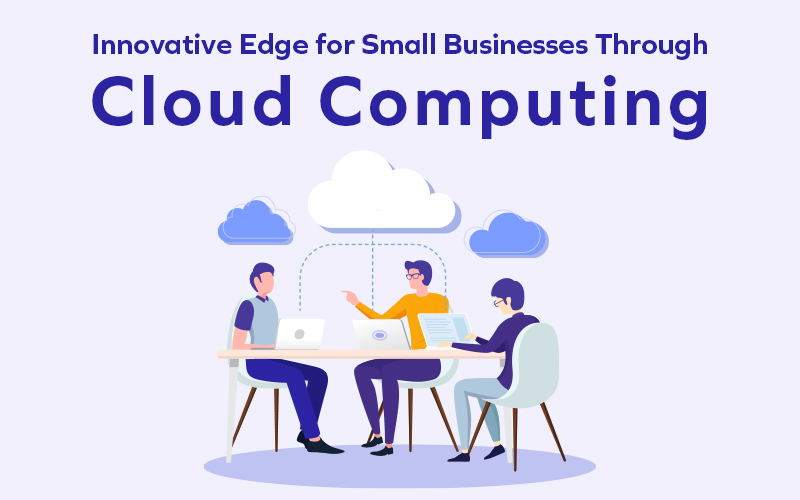
Cloud computing has emerged as a revolutionary technology that enables clients to access their data and applications on any device remotely. The reason behind its rising significance is because the cloud works as a centralized location for storing all the data accessible through the Internet. Small businesses can avail massive benefits from cloud enterprise development in terms of more accessible accounting data on-the-go, invoices, and expenses. Further, automatic upgrades can help them save a lot of time and money, which is extremely significant while they look for expanding their reach.

How Cloud Computing Can Empower Core Operations of Small Businesses

Depending on the core operations, cloud computing can enable small businesses to improve their corporate infrastructure. The most fundamental challenges they can solve through these services include integrated web deliveries through technologies they can’t afford and become scalable. Below are some crucial ways cloud computing helps them:

Workplace Collaboration

The workforce in small businesses and startups is often pretty diverse and physically dispersed too. In such situations, cloud infrastructure can prove to be centralized storage from where they can access anything, anytime, and anywhere. Data housing over the cloud helps members to take over the task from where the earlier one has left. They can easily track orders, manage payrolls, and evaluate accounting tasks. This way, they can share emails and documents, edit and access them, and eventually enhance the quality of projects while working in tandem.

Better Resource Management

Cloud computing enables operating through numerous servers so that small businesses can run their organization without any hassles. These platforms are also reliable because they help in solving IT problems on a real-time basis. Transferring your essential business processes and data to the cloud network enables you to reduce redundancies of losing data in emergency scenarios. Cloud storage can help in lightening up the load of the IT department by deploying services for monitoring and support. It eventually leads you to practice a proactive approach rather than reactive, and keep innovating the possible opportunities.

Enhanced Resilience

Small businesses often have a looming challenge of growing their business to a broader audience. On the other hand, they also fear that they might outpace their infrastructure requirements if they keep growing too quickly. It eventually leads to problems in managing and making the right choices regarding delivering services to their customers. Instead of an in-house team of all tasks put together, a cloud AWS application development is a better-customized solution. The most significant benefit it can have on small businesses is that they can track and manage the time and space needed when they want to scale up their customer services. Cloud computing has one great benefit of enabling businesses to become scalable and flexible enough to add or reduce the capacity without impacting the whole system.

Automation and Backup

Since cloud computing solutions are highly scalable in nature, it also enhances a small business’s capacity to evaluate and maximize its growth. It enables them to predict and analyze the utilization of resources to increase opportunities. These solutions update themselves on a timely basis with new updates and trends, leaving a broader scope for innovation. Plus, recovering after a disaster strikes up the infrastructure is often very time-consuming and costly. Cloud computing keeps backup of all crucial and sensitive data by guarding against hardware failures. It also allows businesses to consolidate all separate needs of applications into one multi-application system.

Security and Analytics

Cloud storage and network allows maintaining and upgrading the file storage systems without investing in information technology separately. This makes cloud computing a good solution because it stores all the data and maintains it at a central location. Centralized storage provides more convenience against cyber threats as compared to the data spread across different devices. Also, if someone logs in from their device, it will remain safe from any unauthorized access even if it is lost or stolen. Plus, the generation of enormous amounts of data everyday needs proper analysis. Big Data analytics is another excellent advantage that provides small businesses with an opportunity to uncover significant market trends. It ultimately assists in easier data processing from both internal and external sources.

Concluding Notes

Small and medium businesses are the ones that are continuously on the lookout for better opportunities for flexibility, resilience, and reliable solution providers. In such a competitive world, building a virtual office for accessing anything from anywhere can be a challenging task. 9series – is a leading enterprise cloud application development company that provides excellent cloud computing solutions. Our expert developers work laboriously to build exceptional and feature-packed solutions with AWS, Azure, GCP, among many other cloud platforms. We focus on the specific needs of each of our clients and ensure to deliver successful, high-performing, and scalable cloud solutions.

Design a site like this with WordPress.com
Get started